Still writing.
What Propi is, does, and seeks to solve
Propi is an all-in-one platform for property management companies. It’s designed to manage all your owners’ contacts, their multiple properties, bookings, transactions for every booking, late fees, and everything else. It automates rent payment notifications to tenants and, why not, we have AI agents too (for the investors 😉).
But seriously, Propi already has all the features mentioned above, and we don’t want to be too AI-ish in every aspect. We talked with more than 20 different property managers, and we heard a lot of different things about how their businesses work. We are working on building an application that can capture and standardize every aspect of their workflow, and put AI where it improves their user experience, not where it doesn’t. This always comes down to saving a lot of time on repetitive tasks. But it is still important to them to have control and clarity in a place where they can be sure their business works properly and cleanly. And a chatbot is not enough.
We help property managers simplify their daily hard work. This includes dealing with tenants and owners, automatically collecting payments from tenants, calculating owner payouts, and filling out endless data after signing a contract for a new booking. We don’t want them to be overwhelmed by having to check a thousand Excel sheets and complicated documents just to find what they need to do next.
Three engineers, working on it in their own free time
The first cofounder, Pipo, knows the business inside out, literally. I was shocked by the amount of new information he shared with me: how real estate works, the name of every building in our home country, which property manager manages which apartments, and even the names of buildings that had not started construction yet. He had never worked in real estate before; he used to work in construction as a civil engineer before his master’s studies at the Universitat de Barcelona. He started with a prototype of Propi in Lovable and did a lot of research on the business.
In April 2025, I received a message from him asking for my opinion on a demo he had made in Lovable—the last time I had seen him was three years before that. He asked me how scalable I thought it would be to use these AI web apps that build apps for you. At that time, it was the first time I did not give a negative view of AI. I used to be very negative about AI development, but that time I took a deep breath (respire hondo para los Spanish) and decided to be positive and say what I thought. I told him that it could be scalable as long as you keep the app simple and prompt the AI with clear and detailed instructions. If you want something complex, you have to be careful. Update! March 24, 2026: Well, we know this is a lot different right now. AI CLI agents are much more powerful nowadays.
We kept chatting. He said he had some potential clients interested in the idea, and I kept asking questions about what the app would do, etc. In the end, he told me I was free to join the project if I was interested. I told him I would think about it, since I was still deciding what I would do in the summer of 2025—whether I was going to stay in New York or go back to Paraguay after finishing another semester in my master’s program at the University of Rochester.
Well, in the end, I decided to go back to Paraguay to give myself a break, spend some good time with my family, and reconnect with friends. I wrote back to Pipo: “Count me in” (no fue exactamente ese el mensaje).
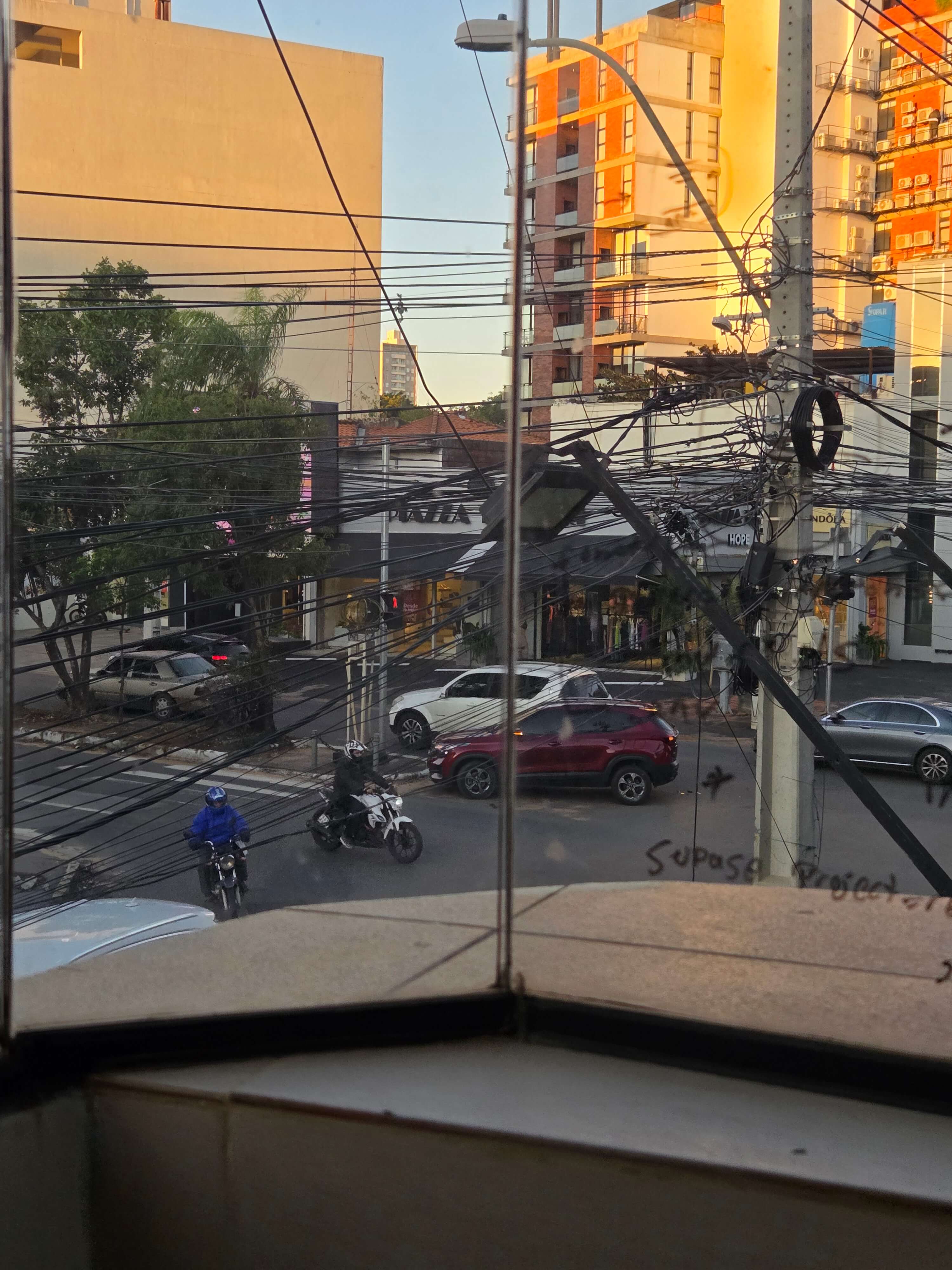
Small office, sketches on the windows
Once I was in Paraguay, we met every day at Pipo's apartment, in a living room that he had converted into an office with extra things he had received as wedding presents. I realized he also knows a lot about the tech industry—the whole venture capital thing, startups, and all that kind of stuff we both know well. We shared a lot of opinions on these things. I contributed my part as a software engineer with my knowledge of deep learning, as well as app marketing and UI/UX design.
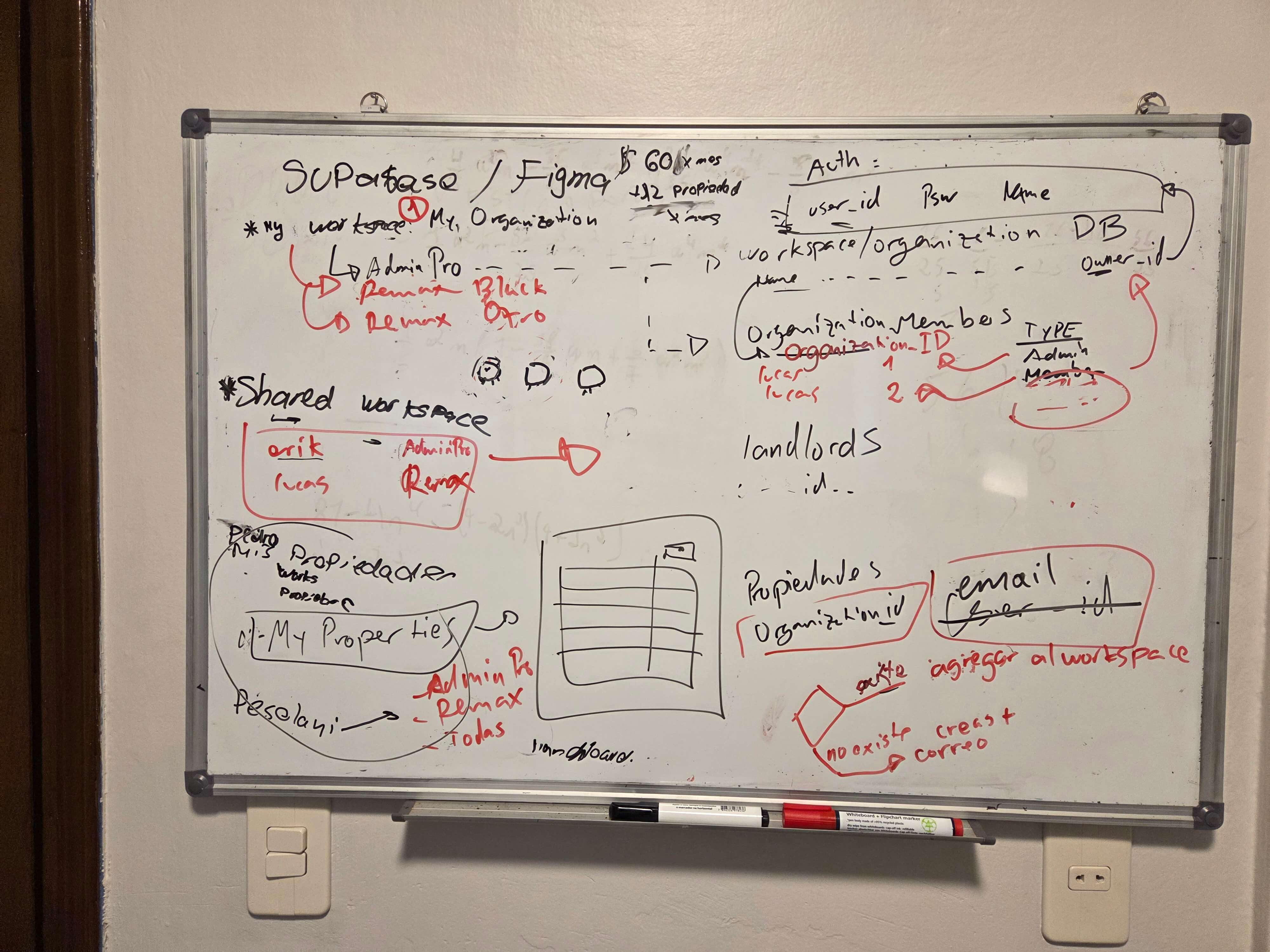
We also started to design some different products Propi could offer: a rental guarantee product, a property insurance service, and the core of Propi to handle income and expenses for people who own properties as investments. We drew different workflows, to-do lists, and explanations for each other on a whiteboard and on the nice, big windows that had a great view of the street and cables.
Our Whiteboard Today, Vibecoding Tomorrow
Our brains are starting to rot a little more every single year, thanks to Shorts, Reels, TikToks, and all that tralalero tralala. It makes focusing on anything nearly impossible nowadays. Putting 100% of my focus into a movie or a video game is so difficult that when I actually manage to sit down and enjoy a game, it feels like a productive achievement in itself.
When you have an incredible tool like AI in your hands, it is hard to avoid using it, but we still have to be patient with it. We started our project by "vibecoding" a lot, but I quickly realized that this methodology would not scale.
Around that time, a third co-founder joined the team: Lucas. He is someone I trust, and I love architecting solutions collaboratively—discussing database connections, UI/UX flows, and system logic. To avoid the unscalable traps of vibecoding, we realized that even though you feel like you should not have to explain much to the AI, you actually have to be very thorough. We start by writing everything down on the whiteboard, focusing on the data relationships and system designs that we cannot just trust to the AI, such as background process implementations and Row Level Security (RLS).
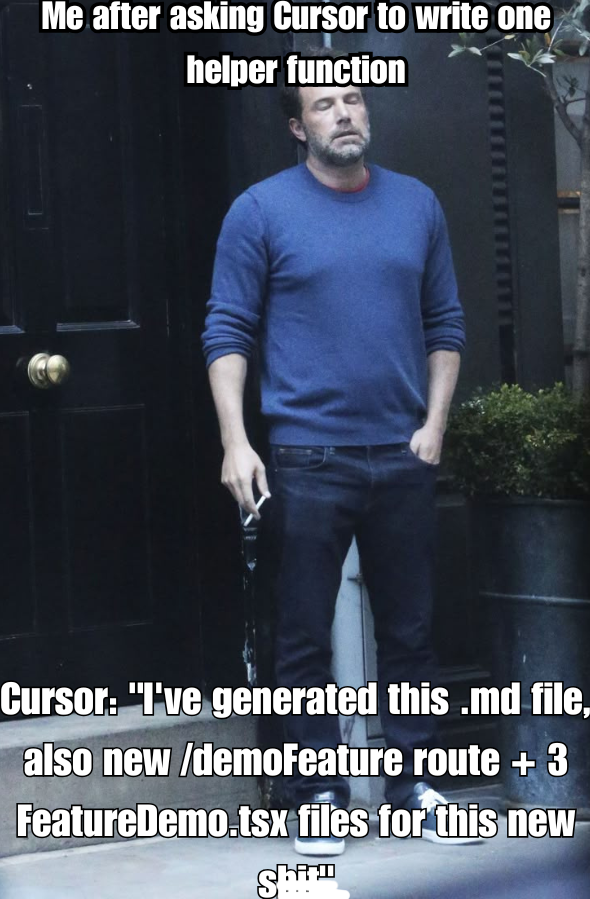
Only after the plan is set do we use Cursor to generate the code. With this approach, it works 100% of the time, especially since we use extra prompts to keep it on track—explicitly telling it not to over-engineer and not to create unnecessary .md files, demo components, or extra routes. For a dashboard application with many moving parts, we also solved early friction with inconsistent input fields by sticking to simple, reusable concepts and asking the AI to keep components as modular as possible—one component at a time. Ultimately, having foundational software experience from the pre-AI era was essential for us to meet our deadlines on such a tight schedule.
To be continued.